Rapid cancer diagnosis using deep learningpowered labelfree subcellular-resolution photoacoustic histology
Abstract
Traditional hematoxylin and eosin staining in formalin-fixed paraffin-embedded sections, while essential for diagnostic pathology, is time-consuming, labor intensive, and prone to artifacts that can obscure critical histological details. Label-free ultraviolet photoacoustic microscopy (UV-PAM) has emerged as a promising alternative, offering fast histology-like images without the need for traditional staining and excessive tissue preparation. However, current UV-PAM systems face challenges in achieving the high spatial resolution required for detailed histological analysis and diagnosis. To address this, we developed a subcellular-resolution UV-PAM (SRUV-PAM) system with a 240-nanometer resolution, enabled by the integration of a high numerical aperture (NA) objective lens (NA = 0.64) and the precise piezo actuators for fine scanning control. This configuration allows visualization of detailed nuclear structures. In addition, we demonstrated virtual staining of SRUV-PAM images via cycle-consistent generative adversarial networks and diagnosis of malignant and benign tumors in liver tissues via densely connected convolutional networks DenseNet-121, achieving an area under the receiver operating characteristic curve of 0.902.
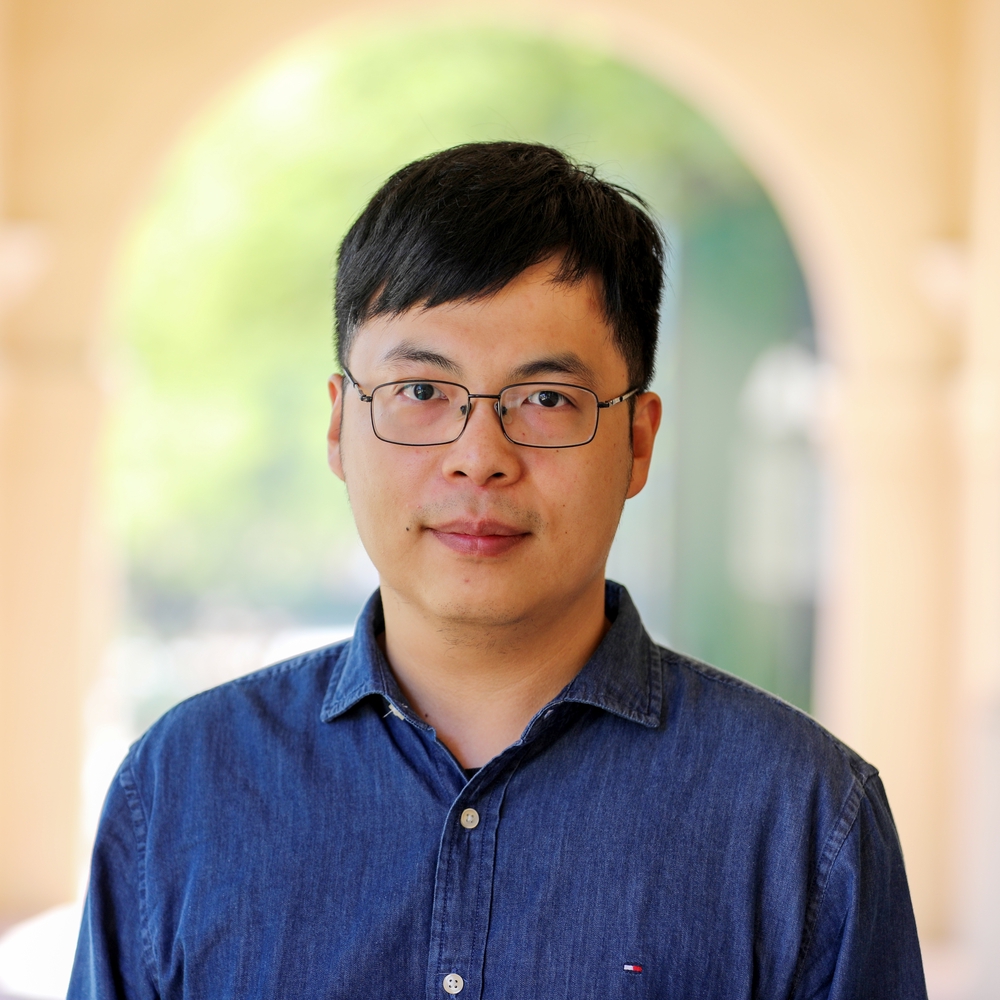
Yide Zhang
Assistant Professor of ECEE and BME
I am an Assistant Professor of Electrical, Computer & Energy Engineering (ECEE) and Biomedical Engineering (BME) at the University of Colorado Boulder (CU Boulder). My long-term research goal is to pioneer optical imaging technologies that surpass current limits in speed, accuracy, and accessibility, advancing translational research. With a foundation in electrical engineering, particularly in biomedical imaging and optics, my PhD work at the University of Notre Dame focused on advancing multiphoton fluorescence lifetime imaging microscopy and super-resolution microscopy, significantly reducing image generation time and cost. I developed an analog signal processing method that enables real-time streaming of fluorescence intensity and lifetime data, and created the first Poisson-Gaussian denoising dataset to benchmark image denoising algorithms for high-quality, real-time applications in biomedical research. As a postdoc at the California Institute of Technology (Caltech), my research expanded to include pioneering photoacoustic imaging techniques, enabling noninvasive and rapid imaging of hemodynamics in humans. In the realm of quantum imaging, I developed innovative techniques utilizing spatial and polarization entangled photon pairs, overcoming challenges such as poor signal-to-noise ratios and low resolvable pixel counts. Additionally, I advanced ultrafast imaging methods for visualizing passive current flows in myelinated axons and electromagnetic pulses in dielectrics. My research is currently funded by the National Institutes of Health (NIH) K99/R00 Pathway to Independence Award.